
R4D-S,Leaking crack & non-leaking crack – Middle East
High-performance composite repair solution for pipe reinforcement

Overview

The objective of the repair performed by 3X ENGINEERING (3X) and its local distributor was to seal 2 cracks and reinforce the pipe integrity at 70-meter depth.

Results

Pipeline has been re-pressurized a few days after repair without any problem known at the moment. This job was a great challenge because of the 70-meter depth. Even if 3X ENGINEERING is now experienced in subsea repairs this job is the first one performed at this depth.

Defect type
Leaking crack & non-leaking crack
Details
32” gas line – max. operating temp. 20°C – operating pressure 1160 psi (80 bar)
Location
MIDDLE EAST
3X Product type
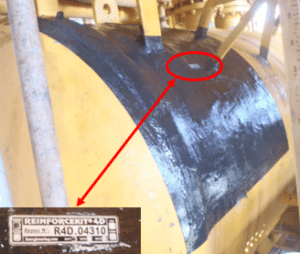
REINFORCEKiT® 4D Subsea (R4D-S)

SCOPE OF WORK


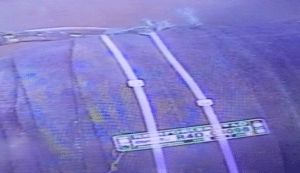
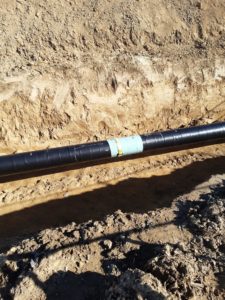
According to ASME PCC-2 and 3X repair calculations, it has been decided to make 2 different repairs as shown.
Eighty-eight composite layers of REINFORCEKiT® 4D SUBSEA (R4D-S) product have been determined to repair Defect No. 1 (external crack with through wall section) and 20 layers for Defect No. 2 (non-opened crack).

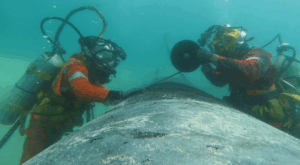
Underwater, several preliminary operations have been performed prior to surface preparation to get a good surface roughness (between 60 µm and 100µm surface profile).

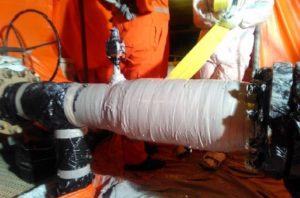
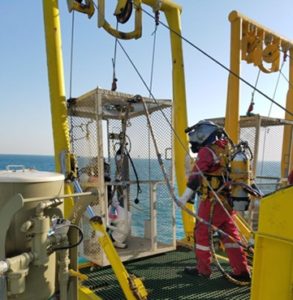
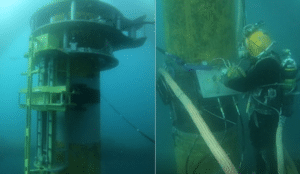
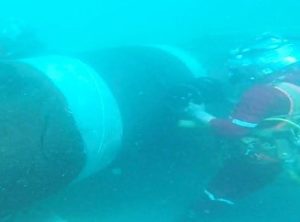
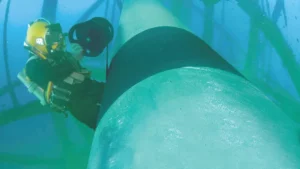
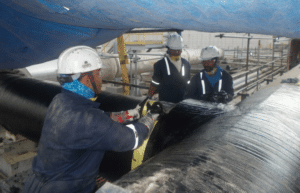
3X wrapping reinforcements have been performed following several stages. It is important to note that working at 70-meter depth requires saturation dive.

  1. For both defects, specific filler has been applicated to fill the cracks and reshape the pipe geometry.
  2. 3X subsea primer applied under the composite plates and over the damaged areas (previously delimited on the pipe) to ensure good bonding.
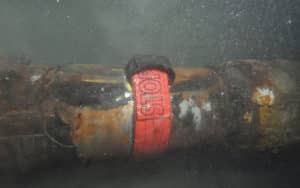
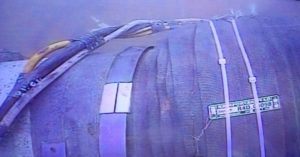
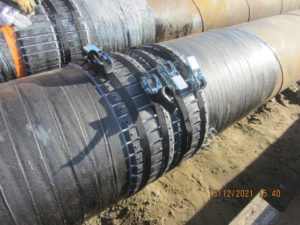
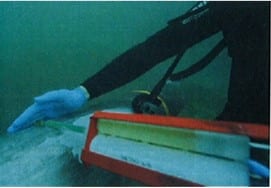
  3. Composite plates application on both defects recovered with F3XSS filler and strongly maintained with ratchet belts for curing.
  4. 3X subsea primer applied on the whole surface of the repair before wrapping.
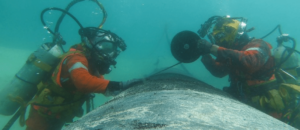
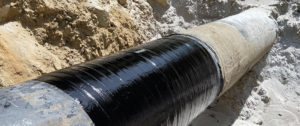
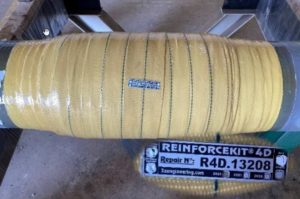
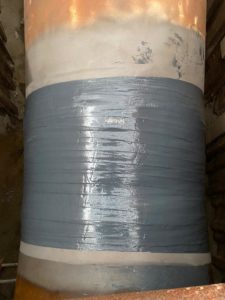
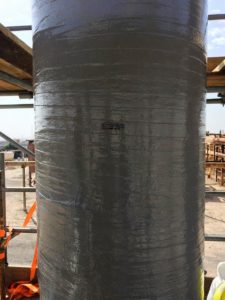
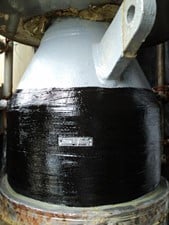
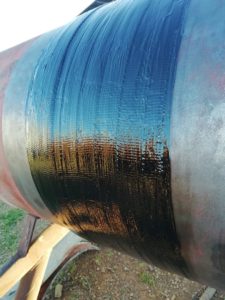
  5. Kevlar® tape pre-impregnated with 3X subsea resin (using special devices developed by 3X) wrapped around the pipe. Eighty-eight layers were necessary to repair Defect No. 1 (i.e. 44 passes of 50% overlap for 1,85-meter length repair). For Defect No. 2, 20 layers were applied (i.e. 10 passes of 50% overlap for 0,82-meter length repair).
